


The Green Enchilada Tradition
Identity and Culinary Heritage
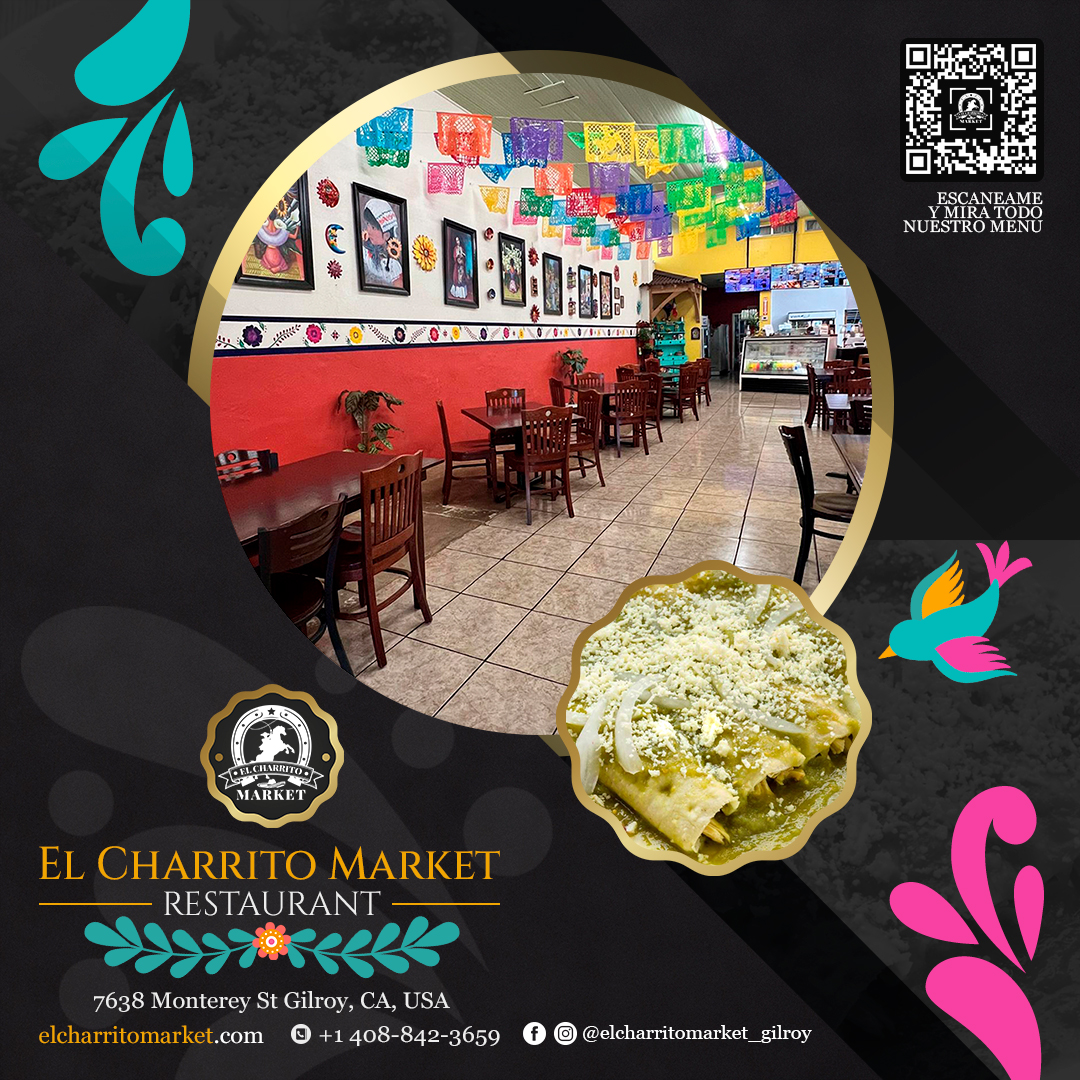
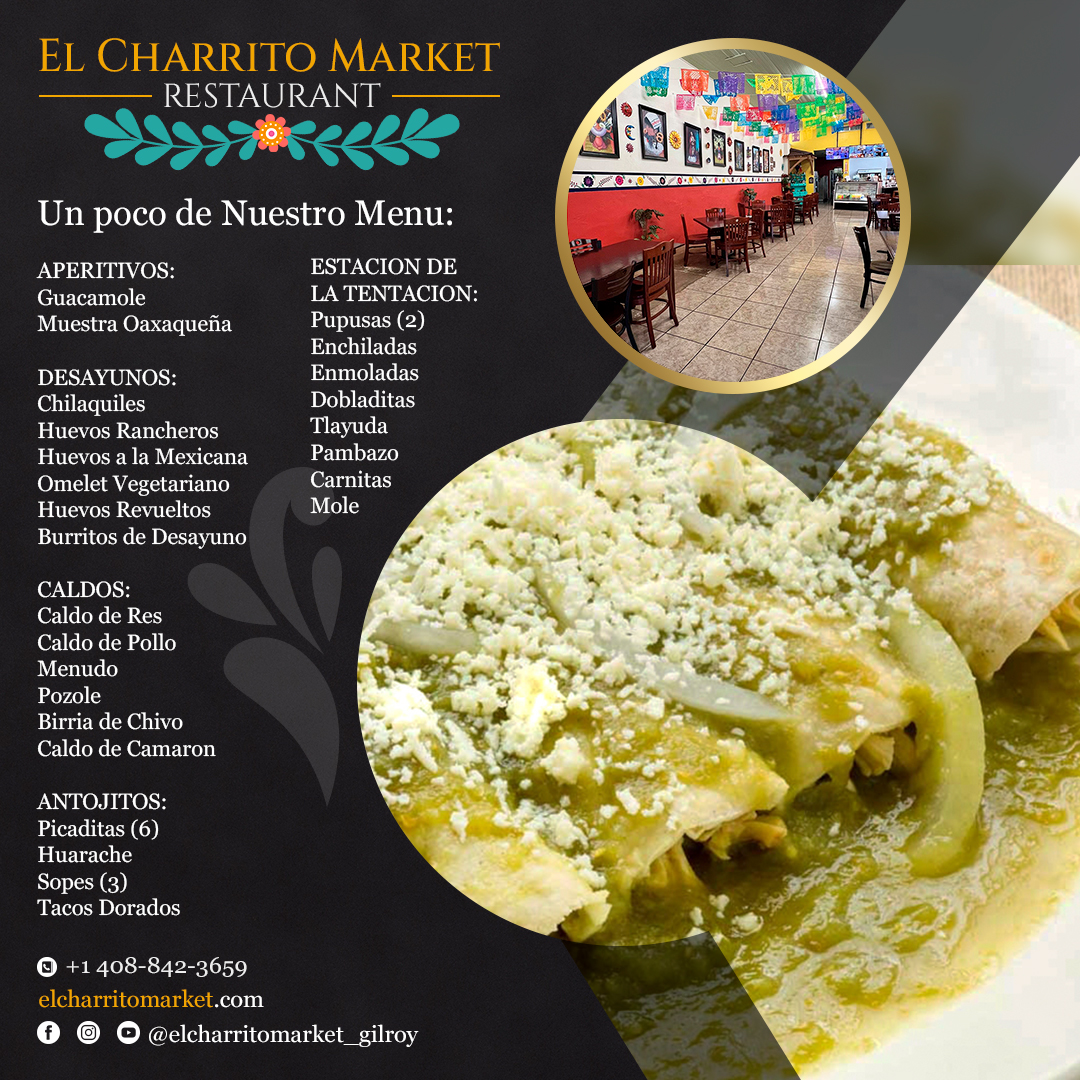
Mexican cuisine is a fundamental reflection of the country's cultural identity and has been recognized worldwide as a World Heritage Site. Within its vast variety of delicacies, traditional green enchiladas stand out as an emblematic dish that seeks to nourish both the body and the spirit of the diner. This essay will examine the importance of this antojito in the Mexican daily cycle, its careful process of technical preparation and its final presentation as a symbol of the country's culinary heritage, values that are kept alive in establishments dedicated to quality, such as El Charrito Market Gilroy.
History and the Lunch Ritual
Historically, enchiladas are classified within the Mexican antojitos, versatile items that can be served independently or assorted to "try everything". In the tradition of the previous century, this dish was considered a key part of lunch, served between 9 and 11 a.m., because it provided the necessary energy for the workday. The base of this delicacy is the corn tortilla, an element derived from pre-Hispanic cultures that requires a perfectly ground nixtamal dough that is hand-turned to achieve the ideal flexibility before being bathed in sauce, a standard of freshness that distinguishes El Charrito Market Gilroy.
Traditional Technique and Preparation
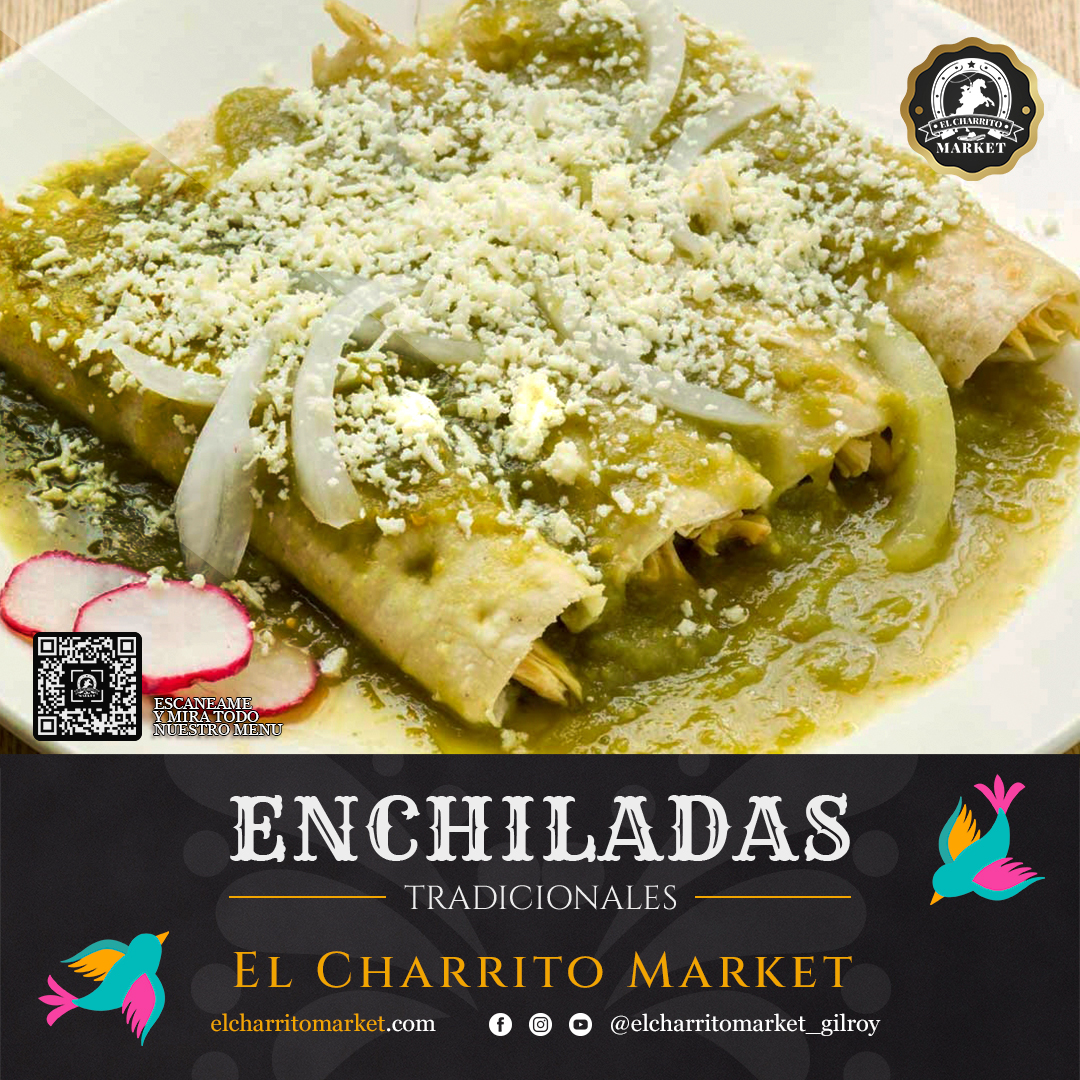
The preparation of enchiladas verdes follows a ritual procedure that guarantees its authentic flavor. The process begins with the cooking of boiled chicken breasts with onion, garlic and salt, which must be carefully shredded once cooked. The essential technical step, according to tradition, is to "revuelcar" or dip the freshly made tortillas in the hot green sauce to absorb the flavor before being stuffed with the chicken and folded. This technique allows the tortilla to remain soft and perfectly integrated with the spiciness of the tomatoes and green chiles.
Presentation and Regional Varieties
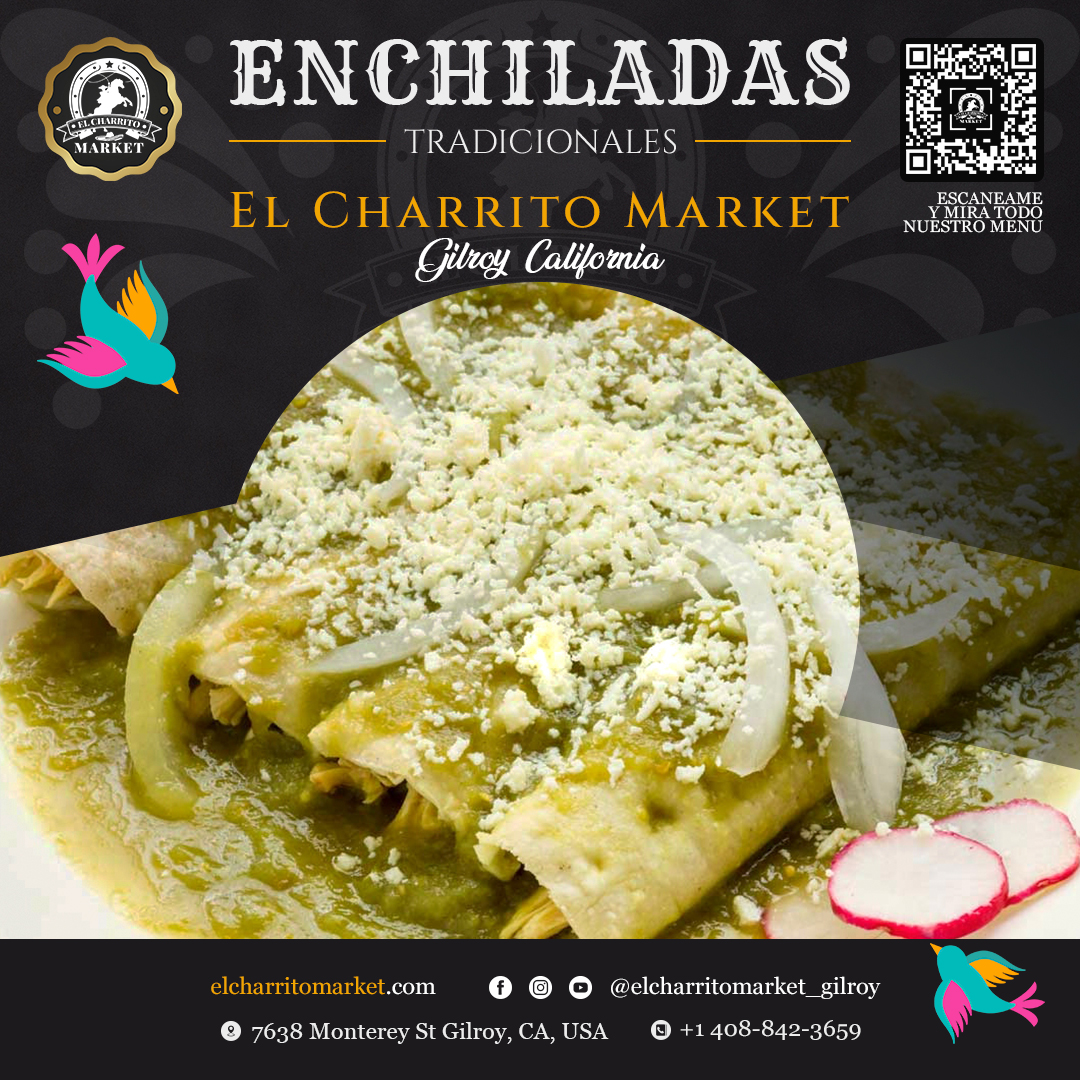
The final presentation is fundamental to flatter the eye and the nose, traditionally serving three to four pieces per plate. To complete the dish, a little more hot sauce is poured on top and decorated with fresh crumbled cheese, onion slices and cream. Although there are more elaborate regional variations, such as Enchiladas Cacahuamilpa from Guerrero that incorporate peanuts and bread, the traditional green version remains one of the most appreciated for its balance and freshness.
Conclusion: A Living Heritage
In conclusion, traditional green enchiladas represent much more than a simple food; they are a manifestation of the history and sensibility of the Mexican people. Their preparation, from the grinding of the corn to the final assembly, constitutes a ritual activity that preserves the seasoning inherited from generation to generation. When tasting this dish in El Charrito Market GilroyThe event celebrates a living cultural heritage that continues to enrich international gastronomy and Mexico's identity.

Leave a Reply